The wood vs. composite question comes up on almost every deck estimate. Neither material is universally better. The right choice depends on your budget, how long you plan to stay in the house, and how much time you're willing to put into maintenance. Here's the honest breakdown.
Upfront Cost
Wood wins on upfront cost. A pressure-treated pine deck runs $18–$30 per square foot installed. A composite deck runs $35–$55 per square foot installed, depending on the brand and board grade. On a 400 sq ft deck, that's roughly $7,200–$12,000 for PT pine versus $14,000–$22,000 for mid-grade composite.
That's a real difference. If budget is the primary constraint, wood is the right call.
Long-Term Cost
Composite wins on long-term cost if you plan to stay in the house 15–20 years. Here's why: a wood deck needs to be cleaned, sealed, or stained every 2–3 years. That's a weekend of work plus materials, or a few hundred dollars to hire it out. Over 20 years that adds up. A composite deck needs an occasional rinse. That's it.
Add in the fact that wood decks often need board replacements at year 10–12, and the long-term costs of a wood deck can close the gap significantly.
Maintenance
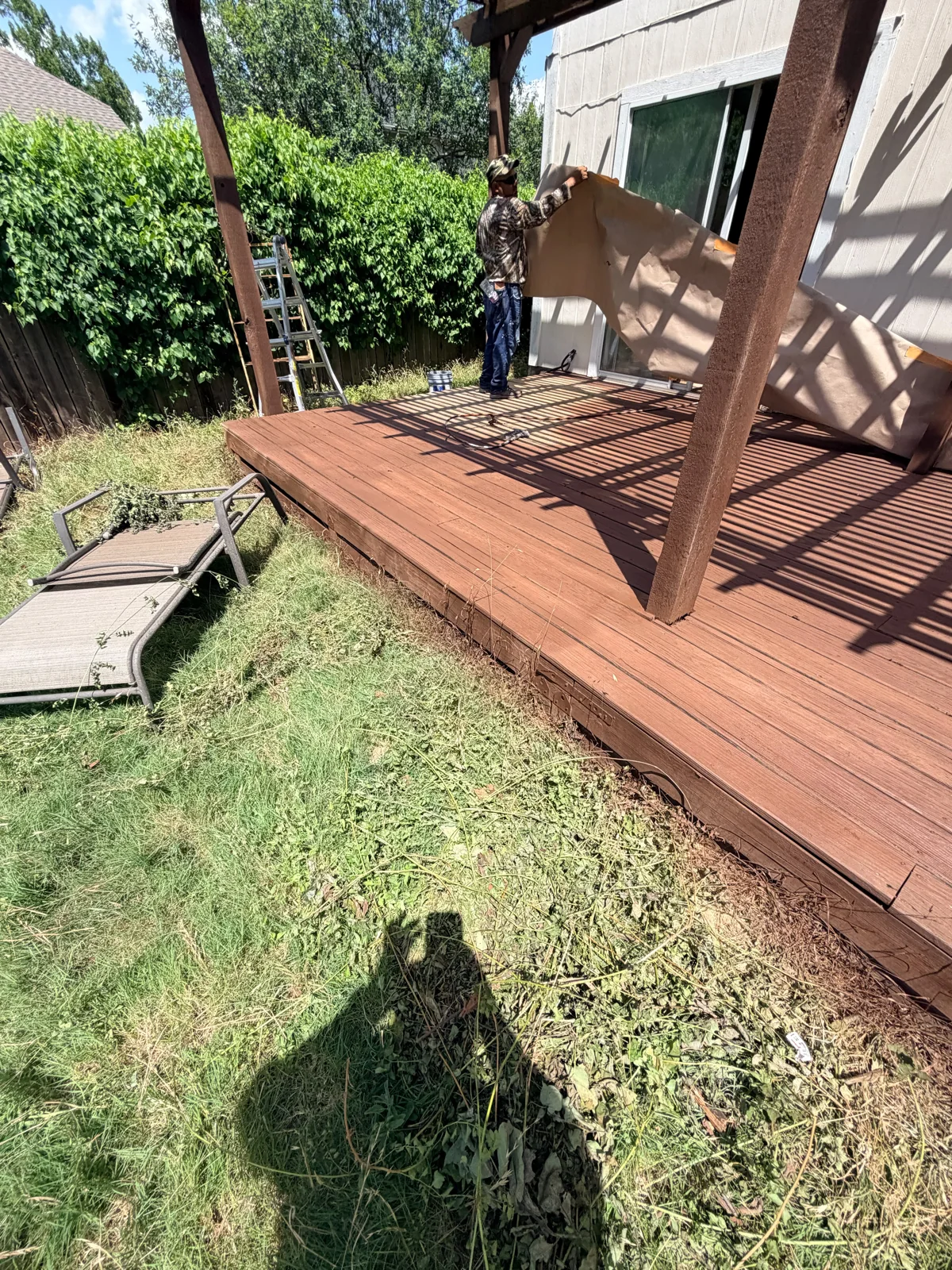
Wood requires regular maintenance or it fails early. The sequence is: clean the deck, let it dry, apply a water-repellent sealant or penetrating stain. Done every 2–3 years. Skip it too many times and you get cracking, gray weathering, and eventually rot. It's not a lot of work but it has to get done.
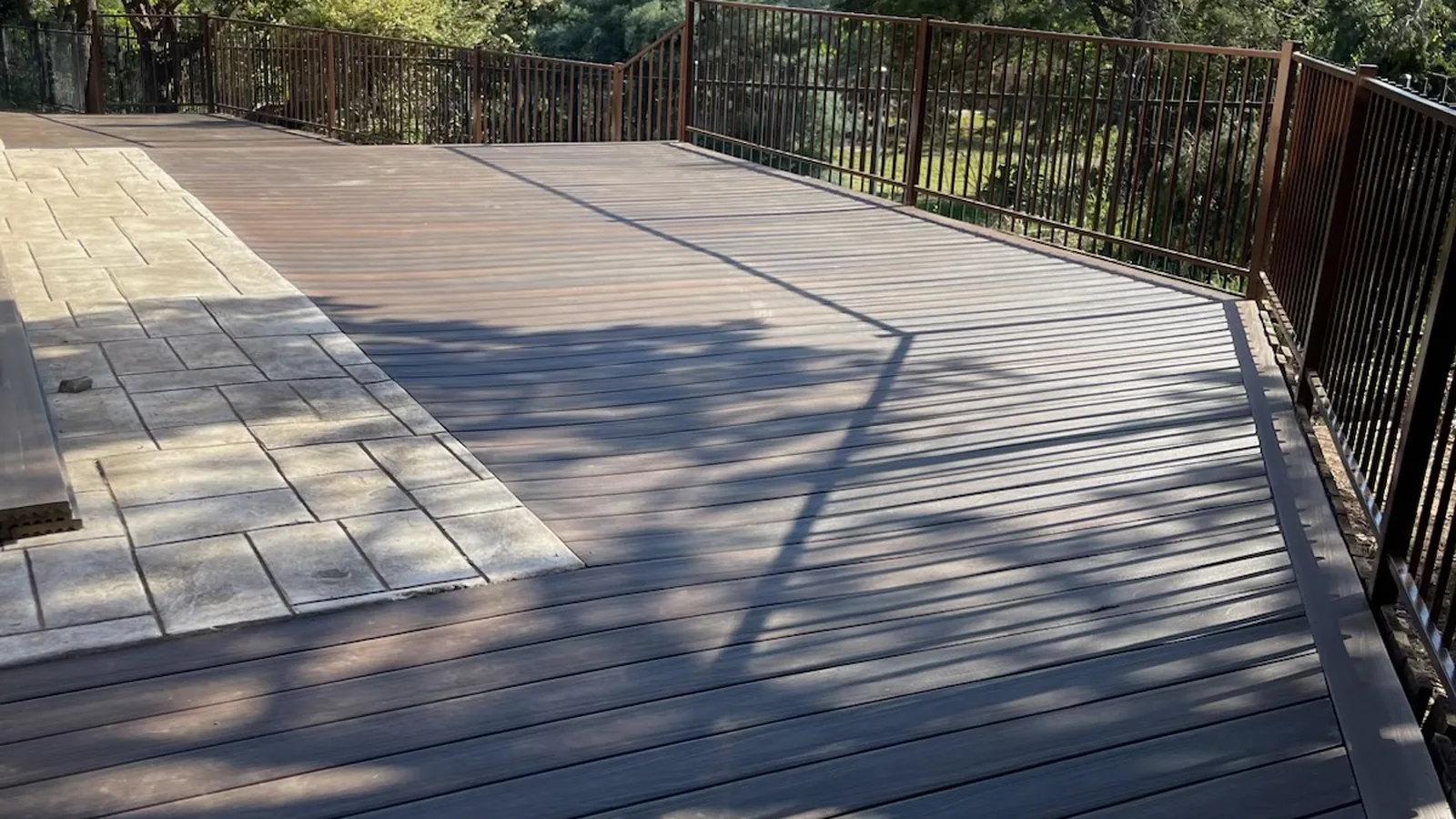
Composite requires almost no maintenance. Rinse off pollen and debris. If something stains it, clean it promptly with a composite cleaner. That's essentially the whole list.
Appearance
This is the one area where it's genuinely subjective. A freshly sealed cedar deck has a warmth that composite doesn't quite replicate. Composite has gotten much better over the years and high-end capped composite with a wood-grain texture looks good, but it looks like composite, not wood.
Some people strongly prefer wood and are happy to do the maintenance to keep it looking that way. If that's you, wood makes sense. If you want something that looks consistently good without effort, modern composite is a solid choice.
Resale Value
Composite generally adds more consistent resale value because buyers don't have to worry about its condition. A 10-year-old wood deck that hasn't been maintained well is a liability on a sale. A 10-year-old composite deck looks essentially the same as it did when it was built. Buyers know this.
That said, if the market in your neighborhood doesn't support composite decks and you're in a price range where every dollar matters, the upfront savings from wood may matter more than the marginal resale difference.
The Bottom Line
If you're staying in the house 10 years or less and want to keep upfront costs down, pressure-treated pine makes sense. If you're staying 15+ years and don't want to think about deck maintenance, composite pays for itself. The worst outcome is a wood deck that doesn't get maintained, which costs more long-term than composite would have.
Want a Quote on Both?
We quote both options on most estimates so you can compare the actual numbers side by side. Call or fill out the form.